

Last Updated: November 15, 2026
Quick Summary
The best ball cap rack for a trailer wall is a vertical rack, because it stacks caps top to bottom and uses little floor-to-wall width in a tight space. The Hat Rack Guy's 12-Cap holds twelve caps and the 8-Cap holds eight, both with a steel holding design that protects bills. Measure your wall height and count your daily caps before choosing.
- Vertical racks stack caps top to bottom, keeping the footprint small in narrow trailer walls.
- The 12-Cap Vertical holds twelve caps, while the 8-Cap Vertical holds eight.
- Both racks use a steel holding design that grips caps firmly without pinching the crown.
- Identify your trailer wall material before mounting, since thin paneling needs a backing strip.
- Keep racks away from wheel wells, heat sources and spots where gear slides during transport.
Table of Contents
- Why Trailer Walls Need a Different Kind of Cap Rack
- What to Look for in a Ball Cap Rack for a Trailer
- Comparing The Hat Rack Guy Ball Cap Racks for Trailer Use
- Mounting a Baseball Hat Rack for Wall Installs in a Trailer
- Trailer Wall Storage Ideas Beyond a Single Rack
- Choosing Your Trailer Cap Rack and Placing Your Order
- Frequently Asked Questions
Why Trailer Walls Need a Different Kind of Cap Rack
A ball cap rack for trailer walls has to handle things a bedroom wall never will: constant vibration on the highway, temperature swings, and tight, awkward spaces. This guide walks through what matters when you pick a rack for a trailer.
Most standard wall hooks were designed for a house, not a horse trailer or camper. On the road, caps shift, bills bend, and crowns get crushed against walls and each other. A rack made for trailer use needs to hold each cap firmly in place and keep the bill protected while the trailer moves.
A rack that can't survive a bumpy drive with a full load of caps isn't a good trailer rack.
What to Look for in a Ball Cap Rack for a Trailer
Before comparing products, decide what your trailer needs. Three factors matter most: how many caps you carry, how much wall space you have, and how well the rack resists movement.
Start by counting the caps you actually use on the road, not the ones sitting in a closet at home. A rack sized for your daily rotation will serve you better than one sized for a full collection.
Capacity and Footprint in a Tight Trailer Space
Trailer walls are narrow and every inch counts. A vertical rack keeps the footprint small because caps stack top to bottom instead of spreading across the wall. The 12-Cap Vertical holds twelve caps in a single column, and the 8-Cap Vertical holds eight.
Check the wall where you plan to mount the rack and measure the height as well as the width. Vertical racks use height well, which is their main advantage in a trailer.
Vibration Resistance and Bill-Safe Hold
Vibration is a major concern for caps on the road. A rack that holds caps loosely will let them rattle. Look for a steel holding design that grips each cap firmly without pinching the crown.
Bill-safe hold matters just as much. The best racks keep caps in their natural shape, so the bill isn't bent or forced into a curve while the trailer moves.
Comparing The Hat Rack Guy Ball Cap Racks for Trailer Use
The Hat Rack Guy offers two vertical ball cap racks suited to trailer walls, plus travel-edition racks designed for smaller spaces. Here is how the two cap racks compare.
| Rack | Capacity | Starting Price | Best For |
|---|---|---|---|
| The 12-Cap: Vertical Wall-Hanging Ball Cap Organization | 12 caps | $85.00 | Larger rotations and wider cap collections |
| The 8-Cap: Vertical Wall-Hanging Ball Cap Organization | 8 caps | $75.00 | Daily rotation in tight spaces |
The 12-Cap is a strong option for owners who want to carry a full rotation. It holds twelve caps in a clean top-to-bottom column. Its solid wood and American steel construction and steel holding design are built to keep caps secure.
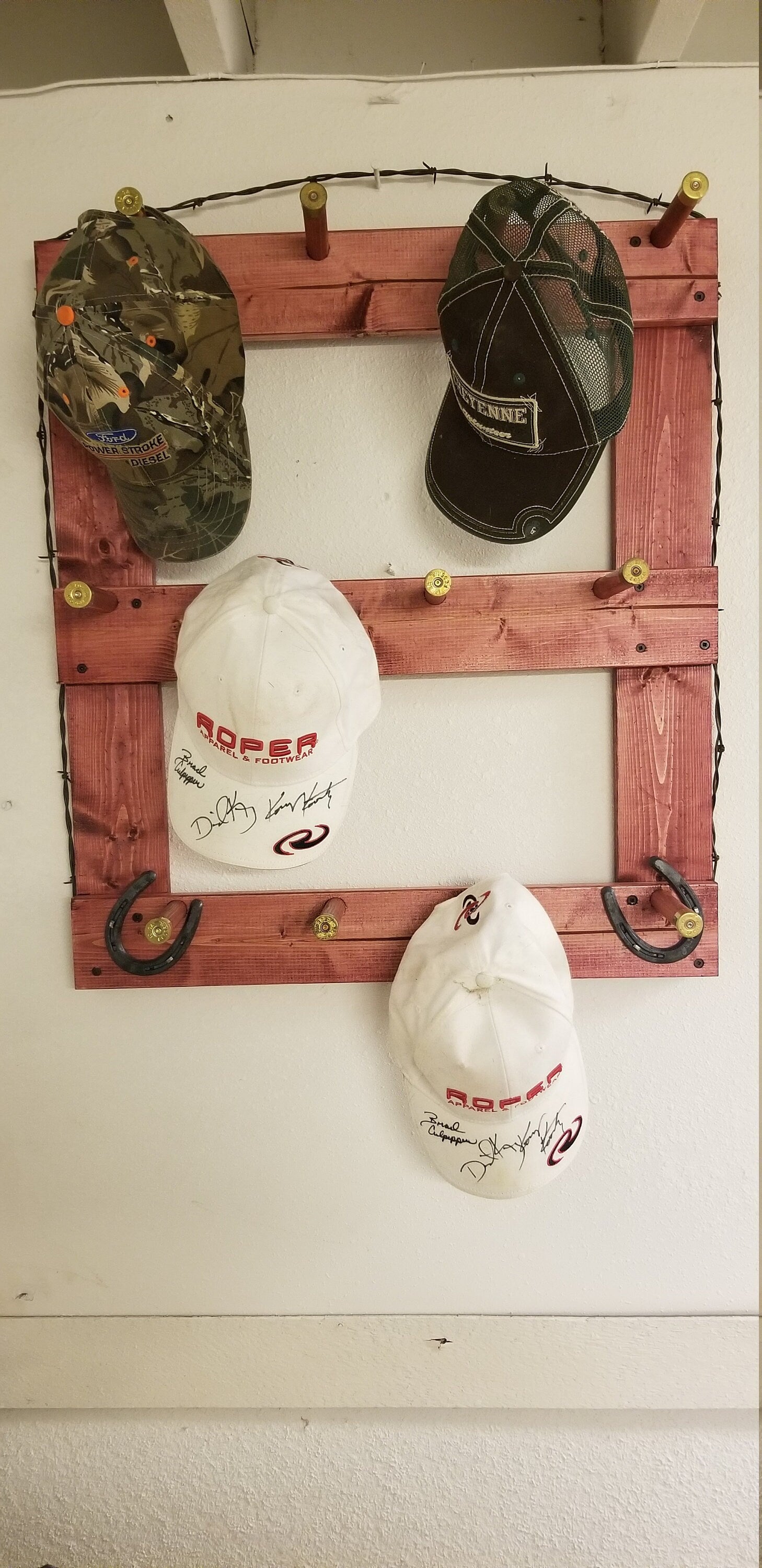
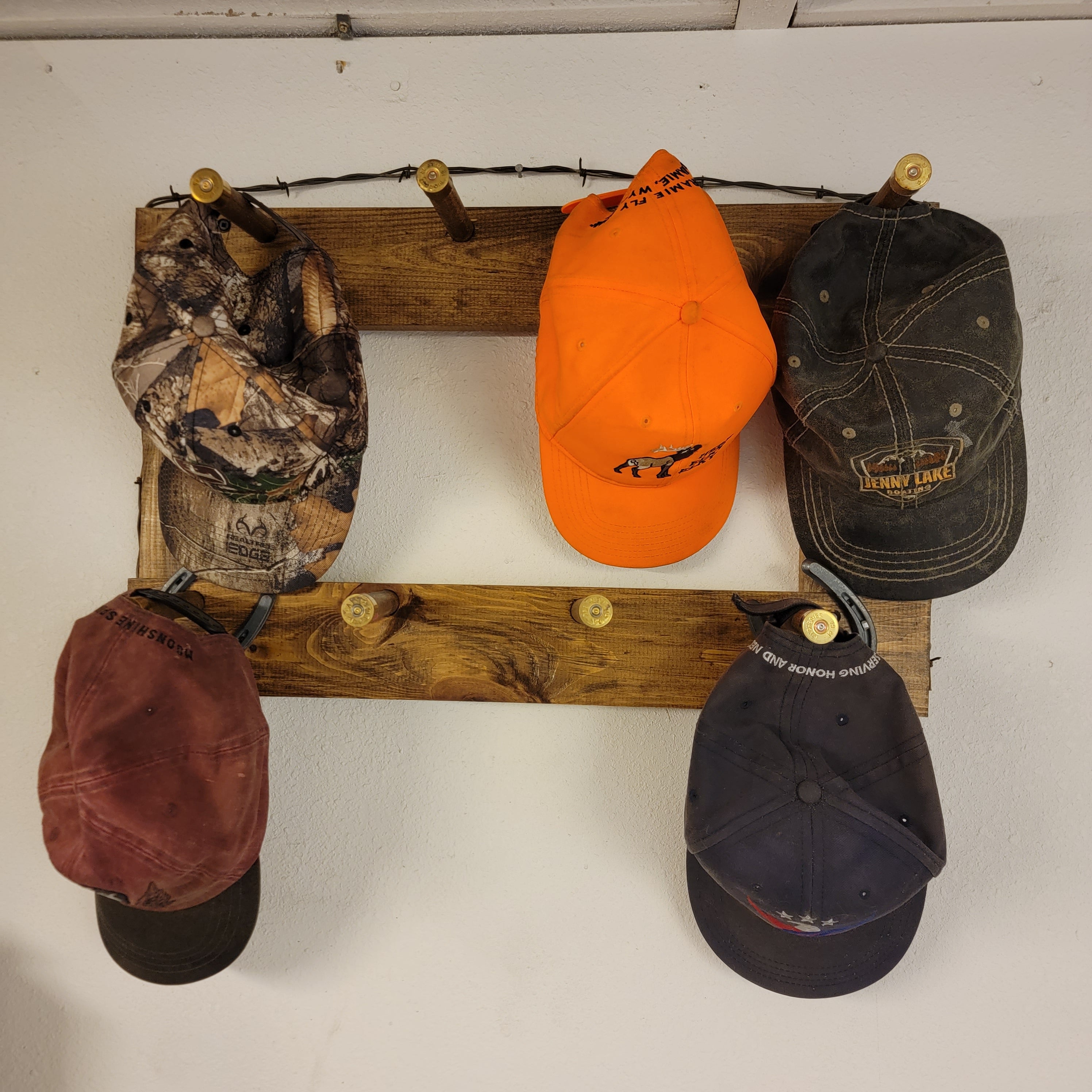
- Pros: Highest capacity, compact vertical footprint, bill-safe steel design, handcrafted in Cheyenne, Wyoming
- Cons: Needs more vertical wall height than the 8-Cap, and the higher price point may not suit a small rotation
- Best for: Trailers with enough wall height and owners carrying a larger collection
The 8-Cap holds fewer caps in a vertical layout. It uses the same steel holding design.
- Pros: Smaller footprint, lower price, same bill-safe steel design
- Cons: Holds fewer caps, so it may not fit a full rotation
- Best for: Daily rotations and trailers with limited wall height
For trailers that need to hold a single hat or a pair, The Hat Rack Guy's 1-Hatter, 2-Hatter and 3-Hatter Travel Editions are designed for trailer and RV use.
Mounting a Baseball Hat Rack for Wall Installs in a Trailer
Mounting is an important step, and the fastener should match the wall material. Trailer walls are not drywall. They are typically one of four things: thin plywood or paneling over a frame, aluminum sheet, fiberglass over plywood, or bare metal studs. Each one needs a different approach, and using the wrong hardware is how racks end up on the floor after a rough stretch of highway.
Identify the wall material first. Tap the wall and look for seams. If it flexes under light pressure, it is thin paneling and needs a backing anchor. If it rings hard and cold, it is aluminum or steel and needs a drill-and-rivet or machine-screw approach. If it is smooth and slightly soft, it is likely fiberglass over plywood, which holds screws well but can crack if you over-tighten.
Thin plywood or paneling walls. These are common in camper interiors and dressing areas. A screw alone will pull through under vibration because the panel is too thin to bite. Find the frame behind the panel, usually a vertical or horizontal aluminum or wood stud, and fasten into that. If no frame lines up with your rack, use a wide-flange backing plate or a strip of 1x3 lumber screwed across two studs, then mount the rack to the strip. This spreads the load and keeps the panel from cracking.
Aluminum sheet walls. Aluminum is common on horse trailers and cargo conversions. Self-tapping screws work, but they can wallow out over time as the trailer flexes. Drill a pilot hole slightly smaller than the screw, use a screw with a sealing washer to keep moisture out, and avoid over-torquing. For heavier racks, blind rivets or rivet nuts give a more vibration-tolerant hold than plain screws.
Metal studs. Many trailer frames use thin-gauge steel studs rather than wood. Standard wood screws will not hold in thin steel. Use self-drilling screws designed for metal, or a rivet nut set into the stud for a threaded anchor. Confirm the stud is structural and not just a trim piece before trusting it with a loaded rack.
Fiberglass over plywood. This holds screws reasonably well, but the gel coat can crack around the hole. Drill a pilot hole, countersink slightly, and use a screw with a flat washer to spread the load. Avoid driving the screw flush with force, snug is enough.
Watch out: Adhesive mounting may not hold up well under trailer conditions. Mechanical fasteners into structure are a more secure approach.
Once the anchor is set, check level before final tightening and load caps evenly from top to bottom.
Trailer Wall Storage Ideas Beyond a Single Rack
A single rack covers most needs, but trailers reward a little planning because the walls are narrow and the environment is harsh. These ideas focus on the constraints that matter on the road rather than generic closet tips.
- Stack vertically on the narrowest wall. Trailer walls are often only a foot or two wide between a door frame and a cabinet. A vertical cap rack uses that height instead of fighting for horizontal space, leaving the wider walls free for tack, tools, or gear. Measure the full height available, not just the width.
- Put the daily cap near the door. A single-hat holder mounted at eye level beside the entry keeps the cap you wear most often off the floor and out of the way, and it reduces the temptation to drape caps over other gear where bills get bent.
- Use a backing strip across studs. On thin paneled walls, a horizontal 1x3 strip screwed into two studs gives you a solid mounting surface for a rack and any future add-ons, and it spreads vibration load across the wall instead of concentrating it at four screw holes.
- Keep caps off surfaces that heat up. Trailer interiors can get very hot in summer sun, and caps left against metal walls or on dashboards can warp or lose shape. A wall-mounted rack keeps caps off hot surfaces and allows air to move around them.
- Match the finish to the interior. Stain and finish choices help the rack blend into camper or trailer interiors, which matters in small spaces where every fixture is visible.
- Add protection in dusty or humid trailers. Road dust, humidity, and grease from tack or equipment can dull hardware and fabric over time. An enamel protection add-on on racks exposed to those conditions helps the finish hold up.
- Plan for a second rack before you need it. If you carry more caps than one wall holds, a second vertical rack in a different area keeps the load distributed and avoids overloading a single mounting point.
Watch out: Do not mount a rack directly over a wheel well, a heat source, or a spot where gear slides during transport. Vibration plus a shifting load is how racks and caps get damaged, even when the mounting itself is sound.
Choosing Your Trailer Cap Rack and Placing Your Order
Pick the rack that matches your rotation and wall space. If you carry a full set of caps, the 12-Cap Vertical holds the most. If space is tight, the 8-Cap Vertical holds eight caps.
Measure the wall before you order, count your daily caps, and consider whether an Enamel Protection add-on suits your setup. Racks are handcrafted in Cheyenne, Wyoming. Shop the full collection at The Hat Rack Guy to find the right fit for your trailer.
Frequently Asked Questions
What is the best hat holder for hanging on a trailer wall?
The Hat Rack Guy's 1-Hatter, 2-Hatter and 3-Hatter Travel Editions are designed for trailer and RV use, and the 8-Cap and 12-Cap Vertical racks hold a full rotation of ball caps. Match the capacity to how many hats you actually travel with.
How do you hang ball caps on a trailer wall securely?
Mount the rack vertically on a solid surface, choosing a spot away from the door swing. Load caps evenly from the top so the weight stays balanced.
How many caps can a wall-mounted rack hold?
Capacity depends on the model. The 8-Cap Vertical holds eight ball caps, and the 12-Cap Vertical holds twelve in a single top-to-bottom column. The Travel Editions hold one, two or three cowboy hats. Pick a rack whose capacity matches your current collection, plus one or two spare slots for new additions.
Can I make a DIY ball cap rack for my trailer wall instead?
A DIY rack can work if you use a sturdy board, solid hooks or pegs spaced for the brim width, and fasteners that bite into studs or reinforced backing. The risk is shifting and bent bills on the road, since many homemade racks lack the steel holding design that keeps caps secure during travel. If you build one, test it with a short drive before loading your best caps.
