

Last Updated: November 17, 2026
Quick Summary
A boot stand for multiple pairs keeps your collection upright, dry and easy to find. The right size depends on your rotation and on boot type, since tall cowboy shafts and wide work boots take more room than dress boots. Measure your tallest shaft and widest calf before choosing a capacity.
- Count boots by type, since bulky boots use more slots than slim ones.
- Subtract one usable slot for every two pairs of bulky boots.
- Check vertical row gap and tree spacing against your tallest shaft.
- Leave side clearance so you can pull a boot without dragging its neighbor.
- Size for your current rotation plus one pair, not a future collection.
Table of Contents
- Why Multiple Pairs of Boots Need a Dedicated Stand
- How to Choose a Boot Stand by Pair Capacity
- The Grand Commander: 6 Pair Floor Stand for Large Collections
- The Ultimate Collector: 8 Pair Floor Stand for Serious Collectors
- The Floor Commander: 4 Pair Stand for Smaller Rotations
- Storing Cowboy Boots Well: Orientation, Airflow and Floor Protection
- Choosing Your Boot Stand and Getting It Home
- Frequently Asked Questions
Why Multiple Pairs of Boots Need a Dedicated Stand
A boot stand for multiple pairs keeps your collection upright, dry and easy to find. Without one, boots end up slumped against a wall or piled by the door, where the shafts crease and the footbeds stay damp. The Hat Rack Guy offers floor stands for exactly this problem.
Stored properly, boots hold their shape longer. A stand also keeps the floor clear, so nothing trips anyone on the way to the door.
A floor stand can hold multiple pairs without drilling into walls.
How to Choose a Boot Stand by Pair Capacity
Start by counting your boots, not just your pairs, and then count them by type. A listing that says "six pairs" is quoting a slot count, not a guarantee that six pairs of your boots will fit comfortably. Usable capacity depends on three things: shaft height, boot width at the calf, and how bulky the toe box is.
Here is how boot type changes what actually fits:
- Dress and fashion boots: slim shafts and narrow toes let you use every slot. A 6-pair stand comfortably holds six pairs.
- Cowboy and riding boots: taller shafts and wider calves need vertical clearance between rows. On a double-row stand, tall shafts can crowd the row above unless the trees are spaced for it.
- Work and steel-toe boots: wide toe boxes and thick soles take more lateral room. Two pairs of heavy work boots can effectively consume three slots on a tightly spaced rack.
- Mixed collections: a realistic rule of thumb is to subtract one pair of usable capacity for every two pairs of bulky boots you plan to store.
The Hat Rack Guy offers three floor stands:
- 4 pairs for a smaller rotation or a single entryway
- 6 pairs for a busy family or a full walk-in closet
- 8 pairs for a serious collection
Before you commit, measure the tallest shaft in your rotation and the widest calf. Then check two dimensions on the stand: the vertical gap between rows and the horizontal spacing between trees. A stand sized for dress boots may not clear a 15-inch cowboy shaft on the upper row.
Footprint matters as much as capacity. Measure the floor space where the stand will live, then leave clearance on at least one side so you can pull a boot out without dragging its neighbor. A stand pushed flush into a corner with no side clearance turns a six-pair rack into a four-pair rack in daily use.
Watch out: buying for the collection you hope to have rather than the one you own leads to a half-empty stand that still eats floor space, size for your current rotation plus one pair, not a fantasy closet.
The article's three stand sizes and the boot types that change what actually fits:
| Stand | Pairs | Best for |
|---|---|---|
| Floor Commander | 4 | Smaller rotations or a single entryway |
| Grand Commander | 6 | Busy families or a full walk-in closet |
| Ultimate Collector | 8 | Serious collections |
Pairs
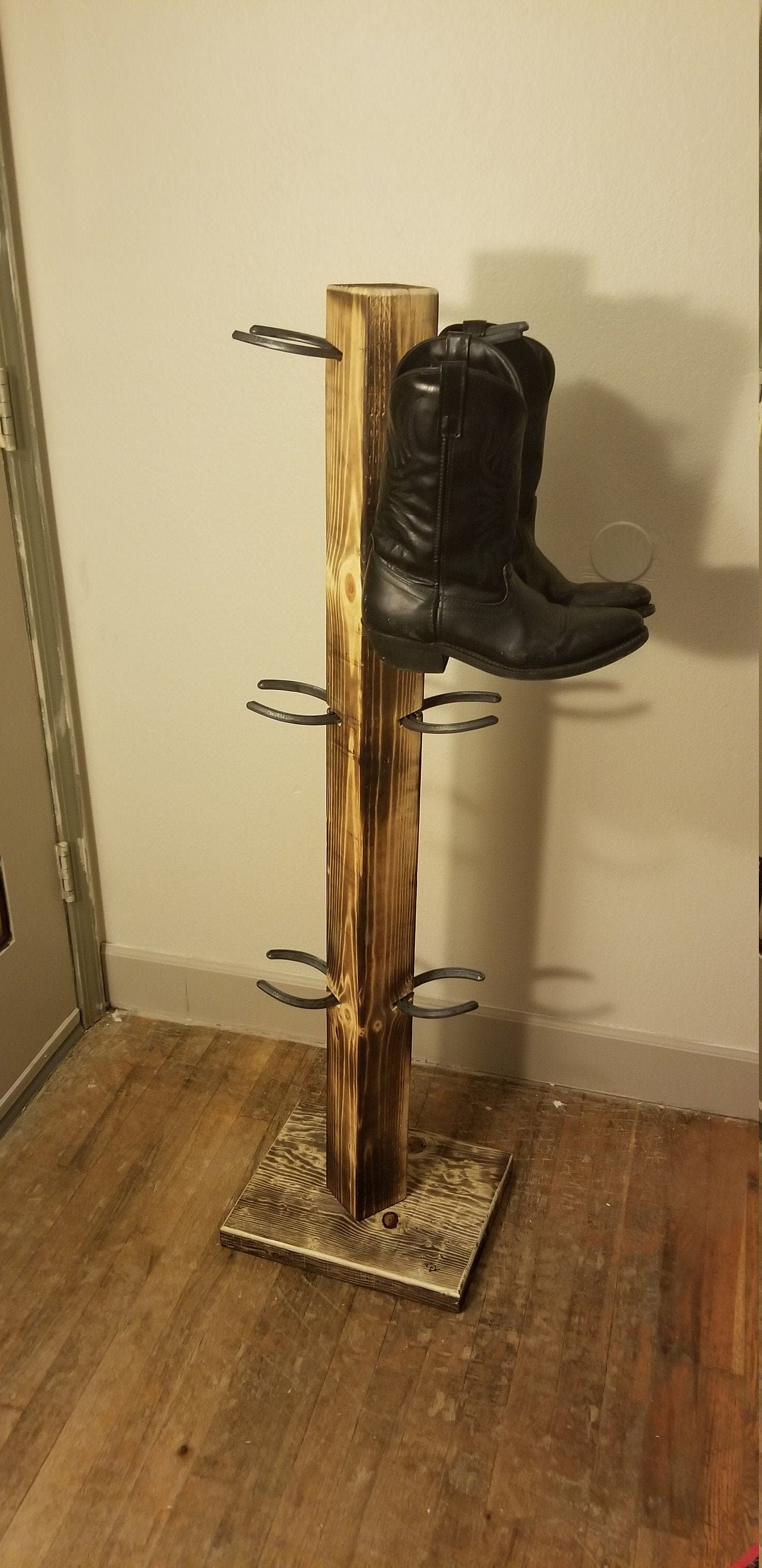
The Grand Commander: 6 Pair Floor Stand for Large Collections
The Grand Commander holds six pairs of boots in a double-row design, and it is a free-standing unit that does not require touching a wall stud.
The base is a reinforced solid wood piece with integrated weighting. The trees are hand-shaped from American steel with a smooth, rounded profile.
Best for: families and collectors who need to store six pairs in a mudroom or walk-in closet. Skip if: you only own three or four pairs and do not want a large stand.
Choose from American Oak, Dark Walnut or Weathered Barnwood. The underside has non-marking pads.
View The Grand Commander: 6 Pair Cowboy Boot Floor Stand
The Ultimate Collector: 8 Pair Floor Stand for Serious Collectors
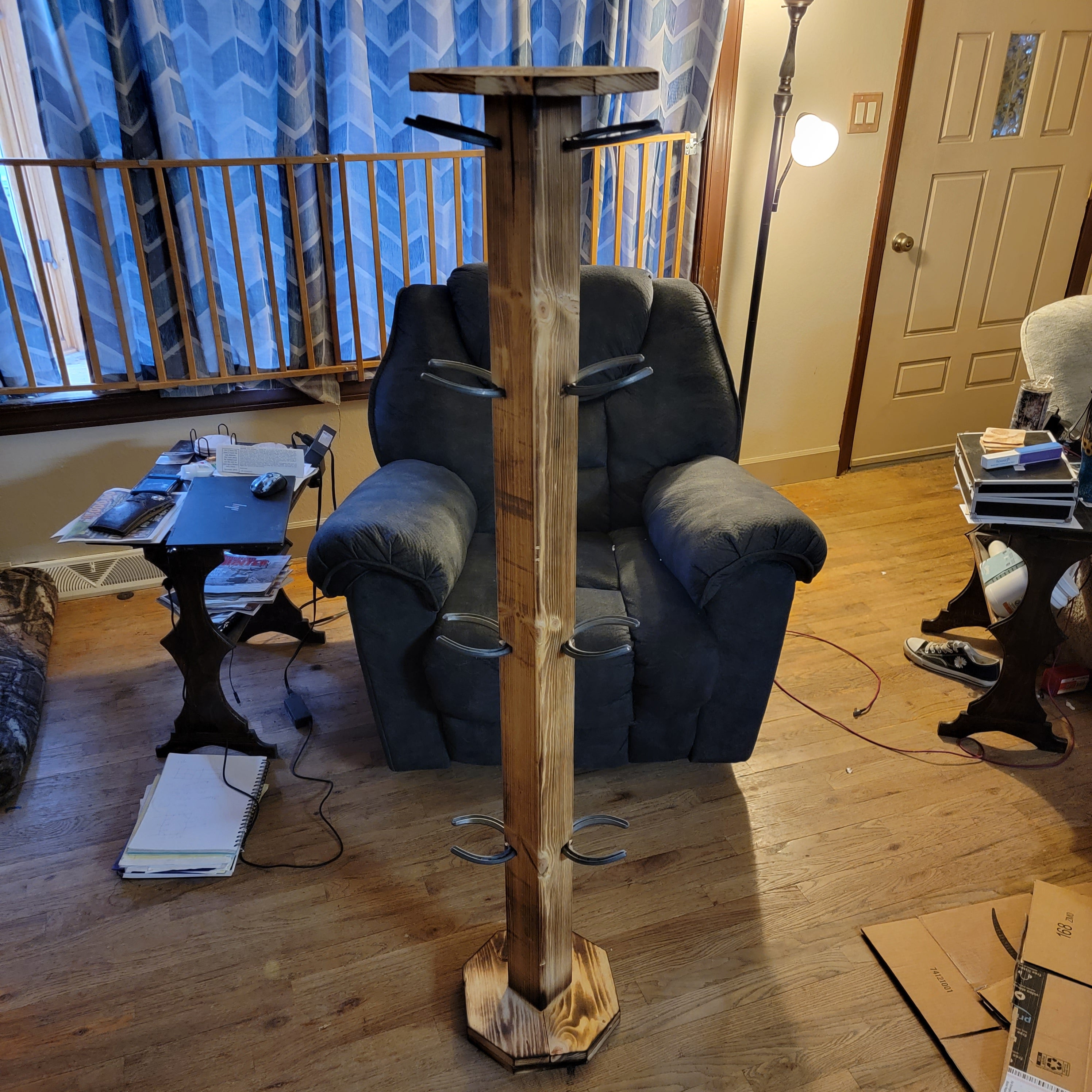
The Ultimate Collector is a free-standing unit that holds eight full pairs, or sixteen boots, in a double-sided array. Its widened solid timber base is designed to resist tipping.
Best for: serious collectors who want a boot display in a master closet or ranch entryway. Skip if: your collection fits on a 4 or 6 pair stand, since the extra capacity will sit empty.
Finishes include Solid Oak, Black Walnut and Weathered Barnwood.
View The Ultimate Collector: 8 Pair Cowboy Boot Floor Stand
The Floor Commander: 4 Pair Stand for Smaller Rotations
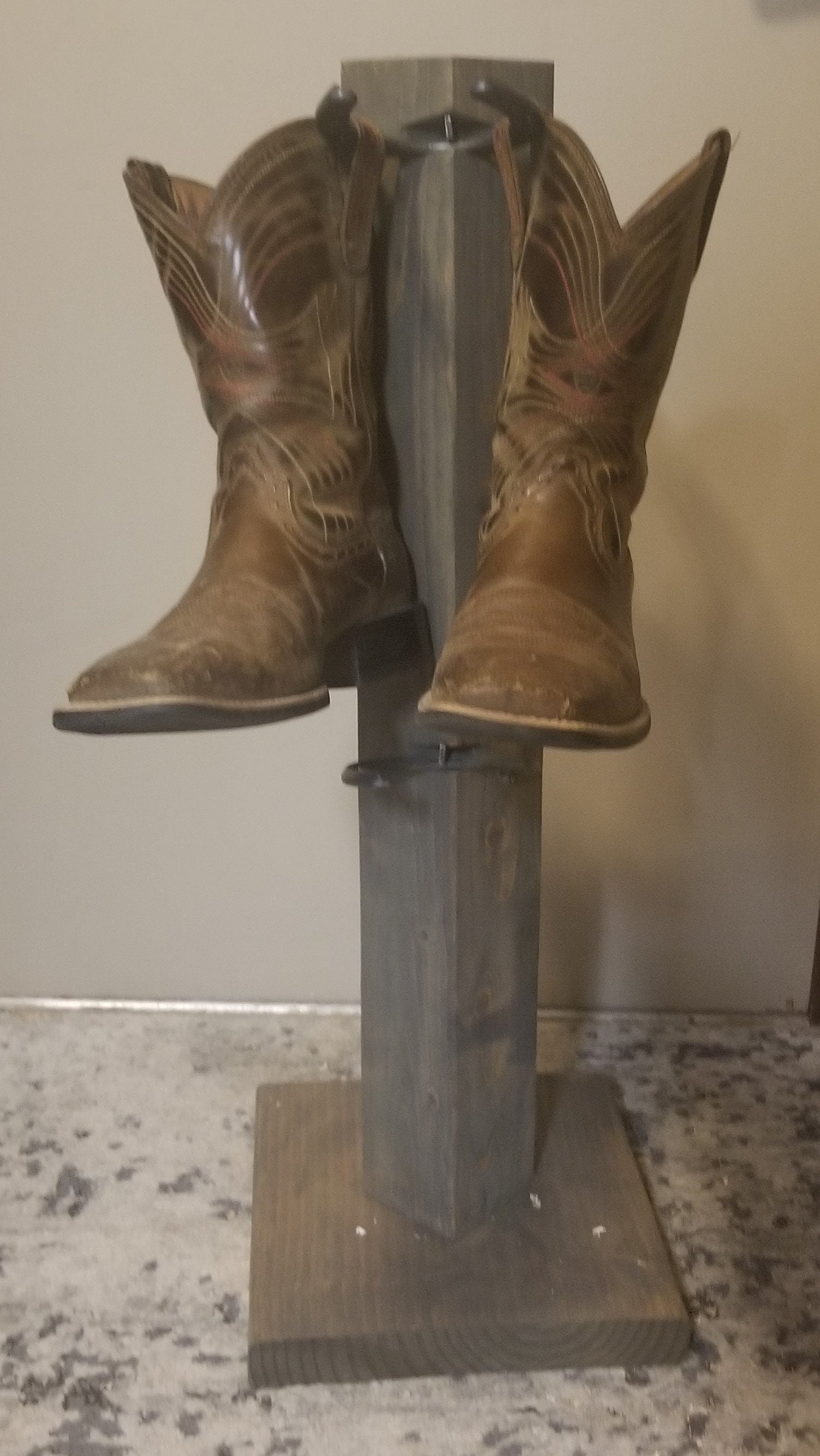
The Floor Commander holds four pairs on a weighted solid wood base. It is free-standing and needs no drilling.
The base has non-marking pads on its underside.
Best for: renters, apartments and smaller collections that need a mobile solution. Skip if: you need to store more than four pairs in one place.
View The Floor Commander: 4 Pair Cowboy Boot Floor Stand
Storing Cowboy Boots Well: Orientation, Airflow and Floor Protection
But orientation is only half the job, what happens underneath and around the boots determines whether a stand survives years of wet, muddy use.
Wet and muddy boots. After a wet ride or a day in the mud, the footbed holds moisture that has nowhere to go if the boot sits flat on a floor. Inverting the boot on a tree lets air reach the interior from below. A common pattern is to let a wet pair drain on the stand for an hour before moving it to its long-term slot, so drips land on a mat rather than the stand base. Keep a shallow tray or absorbent mat under the stand during wet season, it protects hardwood and tile and keeps the base from sitting in a puddle.
Airflow between pairs. Leave a little space between pairs so air can circulate. Crowding boots shoulder-to-shoulder traps damp air and slows drying. On a double-row stand, alternate tall and short shafts so the taller boot on the lower row does not block airflow to the row above.
Heat and leather. Keep boots away from direct heat and damp corners. If a pair gets wet, let it dry at room temperature on its tree instead of near a heater, since high heat can crack leather and loosen stitching.
Floor protection and stability. A stand that holds boots off the floor keeps dust and grit from settling into the footbed, and non-marring pads protect hardwood, tile, and stone. Stability matters as much as protection: a loaded stand with a low, wide base resists tipping when you pull a boot out one-handed. Test a new stand by loading every slot and giving it a gentle nudge, if it rocks, redistribute the heaviest boots toward the center.
Long-term care. Wipe steel trees dry after a wet-boot session to slow corrosion, and check felt pads periodically for grit that can scratch floors. Solid wood bases benefit from an occasional wipe with a dry cloth; avoid soaking them, since moisture swells the grain. With basic care, a well-built stand should outlast several rotations of boots.
A stand that holds boots off the floor also keeps dust and grit from settling into the footbed.
Choosing Your Boot Stand and Getting It Home
Match the capacity to your rotation, then check the footprint against your floor space. If you want a stand that moves with you, a free-standing floor model avoids wall mounting altogether. If you prefer to display hats alongside boots, our Wrangler Dual-Hybrid pairs four cowboy hats with a boot tree on the wall.
The Hat Rack Guy's stands are hand-forged in Cheyenne, Wyoming. Pick the capacity that fits your collection today and the room you have for it, then order from The Hat Rack Guy.
Frequently Asked Questions
What is the best way to store multiple pairs of boots?
Store boots upright on a free-standing stand that keeps each shaft straight and the footbed elevated. Choose a stand rated for your number of pairs, and place it on a floor that suits its non-marking base.
Are boot stands suitable for cowboy boots?
Yes. The Grand Commander, Ultimate Collector and Floor Commander all use hand-shaped steel trees.
How do you keep cowboy boots upright in storage?
Place each boot on a tree so it stands upright on the stand.
Is a boot stand or a boot tray better for multiple pairs?
The Hat Rack Guy offers free-standing floor stands with four, six or eight pair capacity.
