

Table of Contents
- Why Proper Cowboy Hat Storage Matters
- How to Store Felt Cowboy Hats Without Losing Shape
- Cowboy Hat Wall Rack: Display and Protect Your Collection
- Cowboy Hat Travel Case Options for Trailers and Rodeos
- Pest Prevention and Climate Control for Long-Term Storage
- DIY Storage Hacks for Small Spaces and Cabins
- Restoring Hats After Improper Storage
- Conclusion: Building a Storage Routine That Lasts
- Frequently Asked Questions
Last Updated: September 27, 2026
Why Proper Cowboy Hat Storage Matters
The best way to store cowboy hats is upright on a rack or in a box, away from heat, moisture, and direct sunlight, whether you store cowboy hats at home or on the road. Stored correctly, a quality felt hat holds its shape for decades.
Shape Retention and Structural Integrity
A cowboy hat holds its shape through the stiffness of the felt or the weave of the straw. Crush the crown or bend the brim wrong and the material takes a permanent set.
Three things destroy shape fastest:
- Pressure: Stacking hats or cramming them in a closet flattens the crown
- Moisture: Damp felt sags and loses body; wet straw can mildew
Material Matters: Felt, Straw, and Beaver Fur
Felt holds shape but attracts moths; straw breathes but cracks when dry; beaver fur is the most durable and water-resistant but still needs protection from heat and pests.
How to Store Felt Cowboy Hats Without Losing Shape
Store felt cowboy hats in a dust-proof box, resting on the crown, in a cool and dry spot away from sunlight. Add cedar or lavender to keep moths away. Check the hat every few months for shape and pests.
Cleaning and Preparing Felt Before Storage
Never store a dirty hat. Dust and oils break down felt fibers over time.
Here's the routine:
- Brush the hat with a soft horsehair brush, working counterclockwise
- Wipe the sweatband with a damp cloth and let it dry fully
- Spot-clean stains with a felt-specific cleaner
- Let the hat air out for a few hours before boxing it
- Stuff the crown lightly with acid-free tissue to hold its shape
Managing Humidity, Heat, and Direct Sunlight
Heat and humidity are the biggest threats: a hot attic or damp basement ruins a felt hat faster than years of wear.
- Attics and garages that swing in temperature
- Basements and cellars with damp air
- Windowsills and shelves in direct sunlight
- Spots near heaters, vents, or wood stoves
Cowboy Hat Wall Rack: Display and Protect Your Collection
A cowboy hat wall rack keeps hats off the floor and visible, while airflow around each hat prevents mildew.
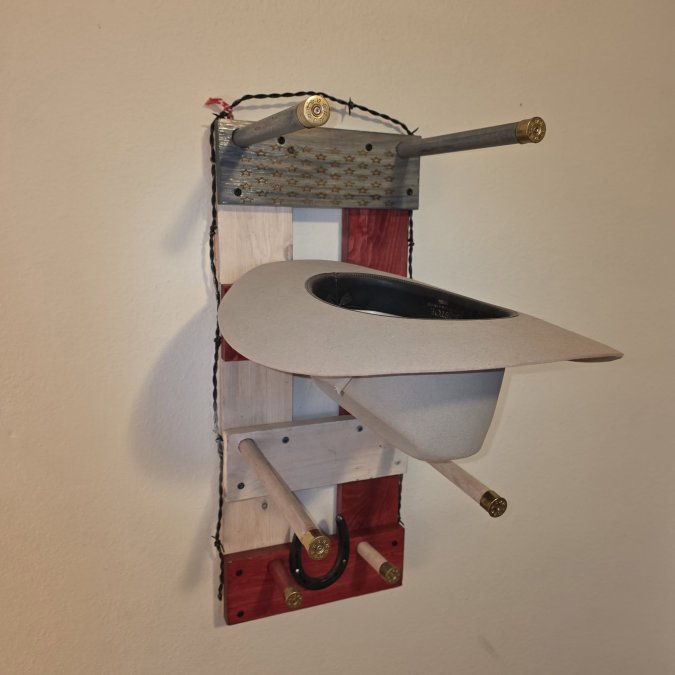
Rustic wooden wall rack used to store cowboy hats in a sunlit cabin entryway
Wall Mount vs. Hat Rack vs. Hooks: What Works Best
Here's how the options compare:
|
Option |
Best For |
Shape Safety |
Space Use |
|---|---|---|---|
|
Wall mount rack |
Collections of 3+ hats |
High, holds by crown |
Saves floor space |
|
Freestanding hat rack |
Entryways and bedrooms |
Medium, depends on design |
Takes floor space |
|
Single hook or peg |
Quick daily storage |
Low, brim takes the weight |
Minimal |
|
Hat box on shelf |
Long-term storage |
High, protects from dust |
Uses shelf space |
Hooks are fine for an hour, not a season, a hat that lives on a hook for months will sag. For most homes, a wall mount balances display, protection, and space. The Hat Rack Guy offers wall-mounted racks for exactly this, holding a few hats or a full collection.
DIY Wall Rack Ideas for Small Spaces and Cabins
In a small cabin, tight closet, or mudroom, you need setups that work in inches, not feet. These DIY approaches hold hats safely without eating floor space.
Mounting and Placement Tips That Protect Your Hats
Where you mount a rack matters as much as what you mount:
- Avoid direct sunlight: UV fades dye and dries out felt. Mount racks away from windows or use a curtain to block sun.
- Stay away from heat sources: Don't mount above radiators, vents, or wood stoves. Heat warps brims and dries straw.
- Leave airflow gaps: Space hats at least 2-3 inches apart so air can move. Tightly packed hats trap moisture and encourage mildew.
- Mount at a height that lets you lift hats straight off: If you have to tilt a hat to remove it, you risk bending the brim over time.
- Use the right anchors: Hats are light, but a rack with several hats still needs secure mounting. Use wall anchors rated for at least 20-30 pounds if you're not hitting studs.
Cowboy Hat Travel Case Options for Trailers and Rodeos
A cowboy hat travel case protects hats during transport by holding them fixed inside a crush-proof shell. For trailer and rodeo travel, look for a hard outer wall and interior padding that cradles the crown, but how you pack the hat inside determines whether it arrives shaped or ruined.
Packing Felt vs. Straw Hats for Travel
Felt compresses and springs back but attracts moisture and pests; straw is rigid and cracks under pressure, so it needs more structural support.
For felt hats:
- Place the hat crown-down in the case so the brim rests on the case floor, not against a wall
- Stuff the crown lightly with acid-free tissue or a clean cotton cloth to prevent denting
- Wrap the brim in a soft cloth if the case has hard interior walls
- Add a cedar sachet or lavender pouch to deter moths during long trips
For straw hats:
- Keep the hat upright or crown-down, never on its side where the brim bears weight
- Use a shaped insert or foam cradle that matches the crown curve
- Avoid overpacking, straw cracks when forced into a tight space
- Keep the case out of direct sun in the trailer, since heat dries straw and makes it brittle
Crush-Proof and Dust-Proof Features to Look For
When shopping for travel storage, check for:
- Rigid outer shell: Plastic, reinforced board, or molded foam that won't collapse under weight
- Interior crown support: A shaped insert or foam block that holds the hat upright and absorbs vibration
- Dust-proof seal: A zipper or lid that closes tight against trail dust and road grit
- Ventilation: Small airflow gaps so trapped moisture can escape, especially important in humid climates
- Carry handle or strap: So the case doesn't slide around in the trailer or truck bed
- Stackable design: If you're carrying multiple hats, stackable cases save space and prevent crushing
For RV and horse trailer owners, a wall-mounted travel display keeps hats secure and easy to grab. Look for a mount that holds the hat by the crown, not the brim, and straps it so it doesn't swing in transit. The Hat Rack Guy offers travel-specific storage that mounts to trailer walls and holds hats securely over rough roads.
Before any long trip, give your hat a quick brush and let it air out. A clean, dry hat travels better and is less likely to develop mildew if it gets damp on the road.
Real-World Travel Scenarios
Different trips call for different setups:
- Rodeo road trips: Multiple hats, rough roads, and dust. Use a hard case with individual compartments, and keep them in the cab if possible to avoid extreme trailer heat.
- Trailer storage between events: A wall-mounted travel display keeps hats off the floor, but keep it out of direct sun and heat buildup.
- Air travel: A crush-proof case is non-negotiable. If it must be checked, add extra padding and consider a hard-shell case with a TSA-friendly lock.
- Short day trips: A simple dust bag or soft case with a crown support is fine, as long as the hat isn't crushed under other gear.
The goal is always the same: keep the hat's shape fixed, protect it from moisture and pests, and avoid heat.
Pest Prevention and Climate Control for Long-Term Storage
Moths and silverfish are the top threats to stored felt and fur hats. Both feed on natural fibers, and both thrive in dark, still, humid spaces. Climate control and pest deterrents together keep hats safe for years.
Prevention beats treatment:
- Store hats in sealed boxes or bags during long storage
- Add cedar blocks, lavender sachets, or cedar-lined boxes
- Refresh cedar every few months, since the oils fade
- Vacuum storage areas regularly to remove eggs and larvae
- Keep humidity low, since pests prefer damp spaces
DIY Storage Hacks for Small Spaces and Cabins
Small cabins and tight closets don't have to mean cramped hats. A few simple setups keep a collection organized without eating floor space.
Try these:
- Over-door racks: Use the back of a closet door for wall-mount style storage
- Under-bed boxes: Flat, dust-proof boxes slide out of sight
- Vertical wall strips: A narrow strip of wall holds several hats in a row
- Corner shelves: Use dead corner space for stacked boxes
Restoring Hats After Improper Storage
Most hats can be brought back after bad storage, but the fix depends on the damage. Dust and light dents are easy. Deep creases, mildew, and pest damage need more work.
Start with these steps:
- Brush off dust and loose debris with a soft brush
- Steam the crown and brim to relax the felt
- Reshape by hand while the felt is warm and pliable
- Let the hat dry on a clean surface, upright
- Treat mildew with a mild vinegar solution, then air dry fully
Conclusion: Building a Storage Routine That Lasts
Good hat storage isn't complicated, but it takes a routine: brush before you box, keep hats upright, watch humidity, and check for pests every few months. Do those four things and your hats will hold their shape for years.
Frequently Asked Questions
How do you store a cowboy hat when not wearing it?
Store cowboy hats upright on a hat rack or wall mount so the brim and crown keep their shape. Avoid resting them on the brim, which causes deformation over time. Choose a cool and dry spot away from direct sunlight and heat exposure. For felt hats, a dust-proof hat box works well for long-term storage. If you wear a hat daily, a cowboy hat wall rack keeps it accessible and protected between wears.
Do you store cowboy hats upside down?
No. Storing cowboy hats upside down puts pressure on the crown and can flatten the crease. Instead, rest the hat on its crown with the brim elevated, or hang it on a hat rack. Some collectors use a hat box with internal support to hold the brim's shape. Upright position on a wall mount or rack is the safest method for shape retention.
Can you store cowboy hats in a plastic bin?
Plastic bins trap humidity and prevent ventilation, which can lead to mildew and felt damage. If you must use a bin for travel or long-term storage, line it with acid-free tissue and add a desiccant pack to control moisture. Better options include a cowboy hat travel case designed for crush-proof protection, or a breathable hat box. For display at home, a cowboy hat wall rack keeps air circulating around the hat.
How do you keep a cowboy hat from losing its shape?
Handle the hat by the brim, not the crown, and store it upright on a rack or in a hat box. For felt hats, brush the nap before storage and avoid stacking anything on top. Keep hats away from heat exposure and direct sunlight, which soften stiffener and cause fading. A cowboy hat travel case protects shape during transport. If the crown loses its crease, steam it lightly and reshape by hand.